Note: This post was automatically imported from Substack. The import process is not perfect, so please excuse any missing / broken links or images.
Rethinking Church, part five
In this part of the ‘rethinking church’ series, we finally reach the purpose of church gatherings. Why do we get together, and what should our gatherings look like? This is obviously one of the biggest questions because meeting together is one of the most important parts of church. Different denominations have their variations, but it seems to me that most churches these days are basically (if you’ll excuse the phrase) singing from the same hymn sheet.
As I’ve said all the way through this series, what I have in mind is something much more radical than making a few tweaks here and there. What I really want to do is go back to the Bible and submit everything that we do to Scripture. I believe we need to have the freedom to cut out anything which is unhelpful and unbiblical, while at the same time holding on to that which is good.
Note: This is the fifth part of a series trying to rethink church from the ground-up. In part one we saw how we need to build on the Bible; in part two we thought about the role of ‘church leaders’ and then in part three we looked at bishops. Last time we looked at the church as family and house churches.
In order to understand what church gatherings are, we’re going to have to do a bit of work clearing the ground first: we need to understand what church gatherings aren’t. Therefore, in this post we will examine two words which have become almost synonymous with church gatherings — ‘worship’ and ‘service’. We’re going to see why these are misleading and inappropriate to use for church gatherings, before looking in a subsequent post about what church gatherings should be about instead.
Church gatherings are not ‘worship’
One of the things which links almost every church denomination in the world is their use of the word ‘worship’. The Church of England, for example, publishes its modern liturgy in volumes called Common Worship. Most denominations have ‘worship services’, as well as ‘worship music’ or even ‘times of worship’. If you’ve been around in church for any length of time, I’m sure the word ‘worship’ will be very familiar to you.
But, what does it really mean? Many people associate the word with singing “worship songs”. Sometimes it’s associated with the whole time we have together. I don’t have the statistical evidence to back this up, but I think a lot of people think worship is about a moment of intimacy with God — like when people are singing and you see them closing their eyes and lifting their hands. It’s seen as a very personal thing — “just me and God in this moment”. Personally, I’ve always struggled a bit with this — it never came easy to me to sing with raised hands or anything like that. At times I’ve felt like I’m not worshipping God properly because I’m not closing my eyes and lifting my hands like everyone else. But is that really worship?
As I said at the beginning, we need to go back to the source material. Given that ‘worship’ is a word taken directly from the Bible, what does the Bible have to say about it?
At the start of this series I talked about the research done by Dr Tom Wadsworth about research in the Bible and in the early church. The thing which struck me most from his research1 is that ‘worship’ in the Bible is never used to describe a Christian gathering. Let me say that again: in the New Testament, Christians are never said to ‘worship’ when they get together.
Tom Wadsworth makes the point that the English word ‘worship’ is used to translate a variety of Greek words. There are two in particular which are most common:
Firstly, proskuneo, which he argues means ‘to prostrate oneself’ (i.e. to bow with your face to the ground). This is sometimes translated as ‘to kneel’, for example, in Matthew 8:2:
A man with leprosy came and knelt before [proskuneo] him and said, “Lord, if you are willing, you can make me clean.”
This is something which people used to do in those days to important people such as kings and rulers — to prostrate themselves to pay homage to them. Glancing through all the times this word is used in the New Testament, you can hardly find a single command to Christians to proskuneo like this.2
Obviously we are supposed to humble ourselves before God (James 4:10; 1 Peter 5:5-6), but this applies to our hearts, which is the most important thing. We need to be different from the Old Testament Israelites, who worshipped God with their lips but their hearts were far away (Isaiah 29:13). In short, we need to worship “in spirit and in truth” (John 4:23 — Jesus uses the word proskuneo in this verse).
Secondly, latreia. This word is sometimes translated as ‘worship’ although it often carries the sense of ‘serve / minister’. It often refers to worship in the Old Testament sense of ritual sacrifice and serving in the temple. For example, Hebrews 9 uses this word:
When everything had been arranged like this, the priests entered regularly into the outer room to carry on their ministry [latreia].
Once again, the New Testament contains no suggestion that latreia is what the church does when it gathers together. The most significant use of these words from a Christian perspective is Romans 12:1. There, Paul says:
Therefore, I urge you, brothers and sisters, in view of God’s mercy, to offer your bodies as a living sacrifice, holy and pleasing to God—this is your true and proper worship [latreia].
Paul says that we do not ‘worship’ (or serve) God by formal, ritualistic worship like offering sacrifices at the temple. Instead, because Christ IS the temple, we serve God by becoming a living sacrifice and offering up our whole lives to God. This is how Christians serve him today — by living every day for God.
The important point here is that all the ritual and formalism of the temple has been done away with in Christ. There is now a new covenant, where God’s laws are written on our hearts in the power of the Holy Spirit. What worship means for us as Christians is simply to lay our lives down before God every day — to do everything in his name and for his glory (Colossians 3:17). In fact, I think it is fair to say that calling a church service ‘worship’ is to do a real disservice to worship, because it implies that what we do outside of church is not worship. The truth is, as Christians we should worship God all the time with our lives, rather than ‘worship’ happening only at a specific time and place.
As the New Testament scholar I. Howard Marshall put it:
From this survey of the ‘worship’ language in the New Testament a firm result emerges. Although the whole activity of Christians can be described as the service of God and they are engaged throughout their lives in worshipping him, yet this vocabulary is not applied in any specific way to Christian meetings. It is true that Christian meetings can be described from the outside as occasions for worshipping God and also that elements of service to God took place in them, but the remarkable fact is that Christian meetings are not said to take place specifically in order to worship God and the language of worship is not used as a means of referring to them or describing them. To sum up what goes on in a Christian meeting as being specifically for the purpose of ‘worship’ is without New Testament precedent. ‘Worship’ is not an umbrella-term for what goes on when Christians gather together.3
Let me add one more thing about my problem with ‘worship’ in the way that most people understand it: ‘Worship’ today is very “me-focussed”. It’s about each individual trying to experience a moment of intimacy with God to make them feel better, rather than focussing us on loving one another. You could say that, taking our attention away from loving one another and focus on ‘worshipping’ is the antithesis of what worship is meant to be. True worship is to lay down our lives and submit to God, and that means obeying his command to love one another. I have witnessed people in church over the years appear to have moments of intimacy in God during ‘worship’, yet whose lives do not show much evidence of Christian maturity and obedience when it comes to loving others.
So, should we do away with the word ‘worship’ altogether?
I don’t think we can do away with the word ‘worship’, given that it’s in the Bible. However, personally I would be happy to erase the word ‘worship’ from the church’s vocabulary on a temporary basis. It’s far too loaded today — it comes with too much baggage: the instant you mention ‘worship’, people think they know what it means — to sing songs, or go to a service, or the like. I firmly believe that the words we use and the things we do regularly will shape our beliefs over time. If we regularly call something ‘worship’ (e.g. singing), we’ll start to think that is all that worship is. I would suggest banning the use of ‘worship’ in church, at least for a while, until we’re in a healthier place as a church and can start to talk about worship in terms of our whole lives. It is true, of course, that we worship when we gather — but only as a small part of our worshipping all the time. I think we need to do a hard reset before we can get to the point where ‘worship’ refers to the Biblical sense.
I appreciate this will probably never happen, but I have made a deliberate and conscious effort in all that I do over the last few weeks to try and avoid using the word ‘worship’. I find it helpful, because it’s one of those words we can use very casually — if you prevent yourself from using it, it can draw you up short and make you really think about what you’re actually saying. It’s good to ensure that we are using words deliberately and carefully, rather than things tripping off the tongue without really thinking about them.
Let’s move on to think about that other word which is commonly used in association with church meetings — ‘service’.
Church gatherings are not a ‘service’
‘Service’ is another word which has become synonymous with church gatherings. Many churches have a set ‘order of service’; if you look on pretty much any church noticeboard in the country it will tell you when the “Sunday services” are.
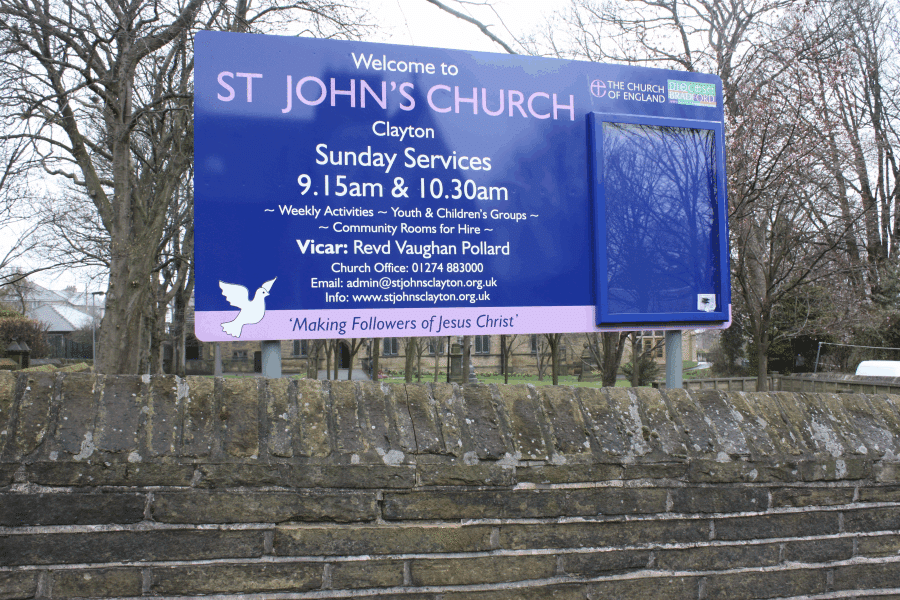
The word ‘service’ is so synonymous with church that people take it for granted. So much so that I wonder if it has become evacuated of any real meaning (a ‘service’ has just come to mean, “Christian meeting”). Nonetheless, given that we want to examine everything in light of Scripture, let’s take a look at what the Bible says.
I mentioned above that the word latreia could be translated as ‘service’ (and is at several times in the New Testament, e.g. 2 Timothy 1:3 “I thank God whom I serve [latreuo]”). But, once again, we have to stress that latreia often refers to the specific kind of service that was done in the temple. I already quoted from Romans 12:1 to show that the apostles considered our whole lives to be service to God. The New Testament does not describe a church gathering as being about ‘service’. Christians should serve God, but that service is about our whole lives — we don’t serve God only at specific times in the week when we gather.
In fact, you could say that the whole idea of a church ‘service’ is rooted in a misconception. Tom Wadsworth made the point that a service implies us serving God — which comes from the Catholic idea that we are offering something to God. Whereas the truth is, God is the one who serves us: we receive from God, rather than offering anything to him per se. It is true that Hebrews says we “offer a sacrifice of praise” to God (Hebrews 13:15) — although, once again, we are told to do this continually, not simply when we meet.
Ultimately I think the word ‘service’ is unhelpful. Let me quote again from I. Howard Marshall:
It is misleading to continue to call our meetings ‘services’ or ‘worship’ if the effect of this phrase is to concentrate attention on what we offer to God, whether to the exclusion of any other constitutive motif, or by making it the primary motif. Worship is obviously an element in Christian meetings, but it is not the principal one. Of course worship is involved in all that we do in church, just as it is involved in all our activity as Christians, but it is misleading to take the fact that in all that we do we serve God and then make this the direct and particular description of what we should do in church. The NT shows that the early Christians did not do this.4
I agree: to call our gatherings ‘worship’ or ‘service’, when these are things which we as Christians should be doing all the time, is to be misleading. It implies that what we do when we gather is ‘worship’ or ‘service’, and therefore what we do at other times is not. It implies that there is a sacred/secular divide, when there is no such thing.
What should we call it instead…?
I hope that I’ve managed to convince you that ‘worship’ and ‘service’ are not the right words to use when it comes to our gatherings as the church. But that does leave us with something of a problem: what do you call it when the church gets together? I have found it a struggle in Church with UTB — I initially called each week a ‘Service of Worship’, which seems ironic looking back!
There were a few different options — ‘gathering’, ‘assembly’, ‘congregation’, ‘meeting’, ‘coming together’. All of these are fairly neutral ways of describing a gathering of people. In the end I went for ‘Church Gathering’, which isn’t perfect and is subject to change, but will do for the moment while thinking it through.
Why is this important? As I said above, the words we use make a difference to the way we think. If we only ever speak of “church” as a building, or as a particular meeting at a particular time and place, we’re going to end up with a diminished view of what the church is. Although we now have centuries of tradition against us, I believe the time has come to rebuild on the foundations and reclaim these words for what they are intended to be.
If we want the church to be what God intends it to be (and could there be anything more important than that right now?), I believe we first need to clear away the vision in our minds of what we think church should be. If that means we need to clear away some of these traditions, so be it. ‘Worship’ and ‘service’ are something we do with our lives, not merely on a Sunday. We do not meet in a church, the church gathers together.
What does the church gather together for? We’ll come onto that next time — do subscribe if you enjoyed this and would like to get them regularly!
Footnotes
- He has a whole presentation on the meaning of the word ‘worship’ which is available on YouTube. ↩︎
- The closest I could find was Revelation 22:9, where the angel tells John not to worship him but to “Worship God”. ↩︎
- From this article in the Churchman. ↩︎
- Ibid. ↩︎
Leave a Reply