Note: This post was automatically imported from Substack. The import process is not perfect, so please excuse any missing / broken links or images.
Rethinking Church, part three
War… huh… yeah
What is it good for?
Absolutely nothing!Edwin Starr – War (1970)1
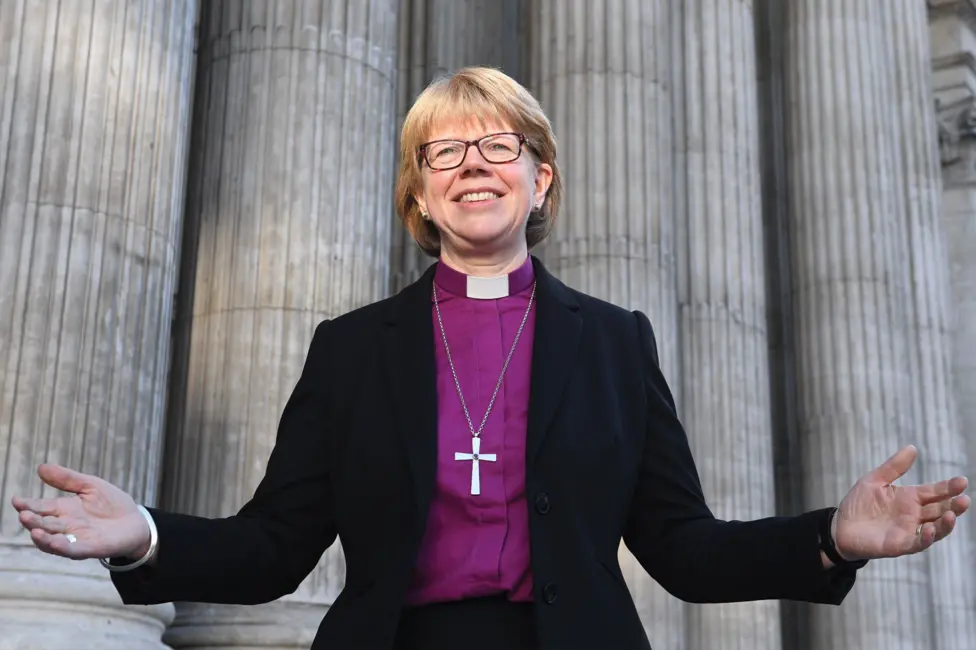
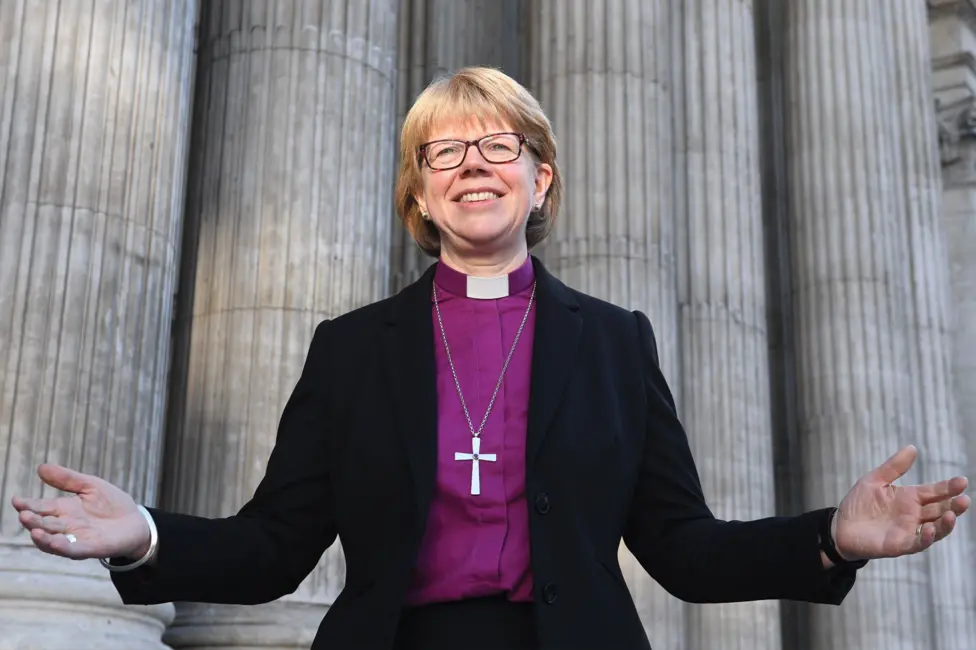
Last week, in my ‘Rethinking Church’ series, I wrote about church leadership. I said there that I’d like to consider the question of bishops in subsequent post. Since then, the new Archbishop of Canterbury has been announced, and I thought this would be an ideal time to look into the issue of bishops. Are they, to coin a phrase from Edwin Starr’s song, good for “absolutely nothing” — or does that only apply to some bishops?
This will be a relatively short post as I already covered most of what I wanted to say last time. To recap: the priesthood of the Old Testament was abolished through Jesus Christ — there are no ‘priests’ in that sense any more. The New Testament has various words for what we call a ‘church leader’ — the three most popular are elders, pastors (shepherds), and “overseers”. This third word is the word commonly translated “bishop” in older translations (the Greek word episkopoi is where we get the modern word ‘episcopal’).
As I said last time, the fact that all three words are interchangeable seems to totally undermine the case for bishops … or does it?
‘External Oversight’
Let’s ignore the word ‘bishop’ for the moment, and think about oversight in a more general sense. As I mentioned last time, there are a couple of occasions where elders were appointed by the apostles: Paul and Barnabas appointed elders in Lystra, Iconium and Antioch (Acts 14:23), and Paul commands Titus to “appoint elders in every town” in Crete (Titus 1:5).
The million dollar question is, does this teach us that there should be some kind of external oversight — that is, there should be people who hold power (in a kind of ‘hiring and firing’ management role) over the church beyond the local church leadership?
I think the answer to this is inconclusive at best — it’s certainly not a knock-down case. The churches in question were new churches; they needed some help getting off the ground. I can see why the apostles would need to step in to appoint elders given these circumstances. I don’t think that is, in and of itself, evidence that we should have bishops in the modern sense.
Additionally, let’s consider the Old Testament: I said last time that the prophets were more akin to the church leaders of the New Testament than the priests. So, who appointed the prophets? Who appointed Jeremiah or Isaiah? Who appointed the “man of God” sent to Eli, for example (1 Samuel 2:27)? They received their calling and commission directly from God, without the need for a human intermediary. In fact, given the context of the prophets (where apostasy was rife), it was in fact necessary for them to receive a commission directly from God, as there were few godly people in the religious establishment who would have been able to commission them.
The overall point I am making here is that I don’t think it is possible to make concrete conclusions about what external oversight should look like — or whether it is even necessary. It was used in some circumstances, but there are many examples of God calling people without the need for human oversight.
However, there is a kind of oversight which I think is vital, and it’s one which is often overlooked in these discussions.
The foundation of the apostles
Paul says that the church is built “on the foundation of the apostles and prophets” (Ephesians 2:20). He doesn’t mean the church is built on him as a person, so much as the apostolic teaching (Acts 2:42). The important thing about the apostles was not their earthly authority such as ‘hiring and firing’, but rather they were the ones who held and passed on the “good deposit” (2 Timothy 1:14).
God gave Paul an authority which was to be exercised through his teaching (e.g. 2 Corinthians 10:8). His apostolic teaching carried weight, to the point that Peter could mention his letters in the same breath as “the other Scriptures” (2 Peter 3:16). Even in the days of the New Testament, these letters were seen to be on the same level as Scripture itself! That’s because they carried the authority of the apostles.
What does this say for the church today? The church is STILL built on the foundation of the apostles and prophets. The church must STILL cling to the same apostolic teaching — the gospel has not changed and will never change.2 Although the apostles themselves died long ago, their teaching lives on in the Scriptures. They still exercise their authority today through the written word.
The implication of this is that a church without human ‘external oversight’, and yet subjected to to the teaching of the apostles, is under the oversight of the apostles. By contrast, a church under the authority of a human bishop yet which does not hold to the teaching of the apostles is not under the oversight of the apostles. The important thing is holding to the teaching of the apostles, rather than having someone above called a ‘bishop’.
Churches have historically recognised that bishops should fulfil this most important role — that is, to ensure that the church is teaching the apostolic faith, as revealed in the Scriptures, and to “drive away all strange and erroneous doctrine contrary to God’s Word”3. Bishops have often been the guardians of the faith and have stood up for biblical truth over against the world — such as Athanasius, whose motto was “Athanasius Contra Mundum” (Athanasius against the world). He stood up for the divinity of Christ even when it seemed the whole world was embracing the Arian heresy.
It hardly needs saying that bishops like Athanasius were a good thing. Many of the early church fathers were bishops, and the church today owes them a great debt. At the same time, what happens when bishops do not stand up for the apostolic faith? That brings us to the Church of England today.
Modern Bishops
I can think of precious few bishops today in this country who actually do what bishops are supposed to do. In fact, I believe that the job of a bishop — to uphold and defend the apostolic faith — is actually impossible in the modern Church of England. CofE bishops essentially have to accept a level of compromise to even become a bishop in the first place. A bishop is a very ‘political’ role — that is, there’s very little actual power to ensure that clergy are teaching sound doctrine. Bishops have to be content with trying to influence things through other means.
In a nutshell, I am trying to make the point here that bishops are a good idea if they do what the apostles did and uphold and defend the apostolic gospel message. At the same time, we are witnessing in the Church of England what happens when bishops abandon this role and instead become managers. Bishops who do not teach and uphold the apostolic gospel are, to paraphrase Edwin Starr, good for nothing. In fact, it’s worse than that — it would be better if they weren’t even there at all.
In summary, I believe that a ‘bishop’ (or whatever your preferred word is) is not biblically required in the same way that pastors are required. Every church should submit to the teaching of the apostles, but it is not a requirement that there be a human being watching over their shoulder to make sure they do. Bishops, if they are there, should uphold and enforce the apostolic teaching. When they do, this is a good thing; when they do not, this is a very bad thing. It reminds me of the children’s poem:
There was a little girl,
Who had a little curl,
Right in the middle of her forehead.
When she was good,
She was very good indeed,
But when she was bad she was horrid.
When bishops do their job, it’s a good thing — and the church today stands on the shoulders of giants of the faith such as Athanasius who stood firmly in faith even when the whole world was turning against them. When bishops don’t do their job, it would be better for the church that they were not there.
So, should the church have bishops? As I’ve said, I don’t think this is a ‘black and white’ answer. Speaking personally, I’d be happy with a godly bishop, but would reject an ungodly one (part of the reason why I needed to leave the CofE). Ultimately, however, my responsibility is to God, who will hold me accountable. The church is his, and he will purify his church — with or without the bishops. My part in this is to obey the apostolic teaching and submit to Christ as Lord, whether or not another human being is there watching to make sure I am doing that.
Note: you may be interested in some thoughts I wrote a while back about accountability, which is also relevant to the discussion about bishops.
Footnotes
- You can find the song on YouTube if you don’t know it. I like to think of Sacred Musings as Christian thinking sprinkled with a little bit of random 20th century pop music… ↩︎
- Galatians 1:8, “But even if we or an angel from heaven should preach a gospel other than the one we preached to you, let them be under God’s curse!” ↩︎
- According to the Church of England Ordinal (Book of Common Prayer) for the consecration of Bishops. ↩︎

Leave a Reply