Note: This post was automatically imported from Substack. The import process is not perfect, so please excuse any missing / broken links or images.
We’ll give you every support, short of actual help…
Dear children, let us not love with words or speech but with actions and in truth.
1 John 3:18
Over the last few years it has become increasingly clear that there many of our elites are pursuing an agenda which is completely at odds with human flourishing. Western society has changed from believing that every human life is sacred because all are made in the image of God, to believing that human beings are like cattle who must be watched and controlled all the time.
Sometimes the mask slips, and the quiet part gets spoken out loud, as it did a few weeks ago with Lord Brooke’s speech in parliament:
Lord Brooke of Alverthorpe delivered a truly bonkers speech in which he appeared to suggest that assisted dying, as a tool of population control, might contribute to the fight against climate change. He heaped praise on abortion and (I am not making this up) even homosexuals for their efforts at keeping the population down. If he’d been given a few minutes longer, I suspect we might have heard paeans to mosquitoes and the Black Death. This was without doubt one of the most surreal speeches I have ever heard in my years covering Parliament; Thomas Malthus meets Greta Thunberg with a soupcon of Logan’s Run. It made Jonathan Swift’s modest proposal sound like a day at the Wacky Warehouse.
It may have been a crazy speech, but he’s not the only one who has talked about the problems of ‘overpopulation’: many people have spoken about the need to do something about it, including Bill Gates and the late Prince Philip.
In the original Matrix film, Agent Smith says to Neo: “Human beings are a disease, a cancer of this planet. You are a plague, and we are the cure.” When the film was released, it sounded like the kind of thing that would only be spoken of in a make-believe, dystopian sci-fi fantasy world. Now, I think it’s basically the mindset of the vast majority of our elites. This is something I’ve spoken about a few times, e.g. this piece about Axel Rudakubana:
If you haven’t seen it and want to find out more of what our elites have planned for us, check out The Agenda: Their Vision, Your Future by Oracle Films.
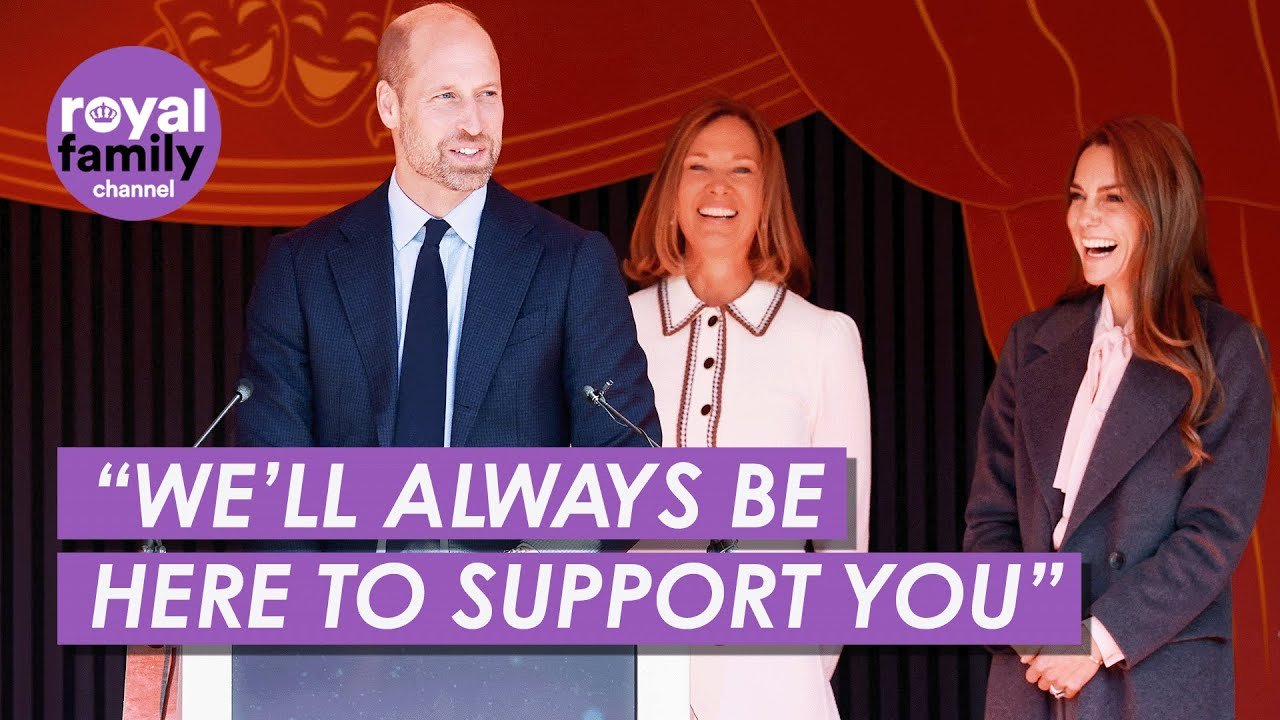
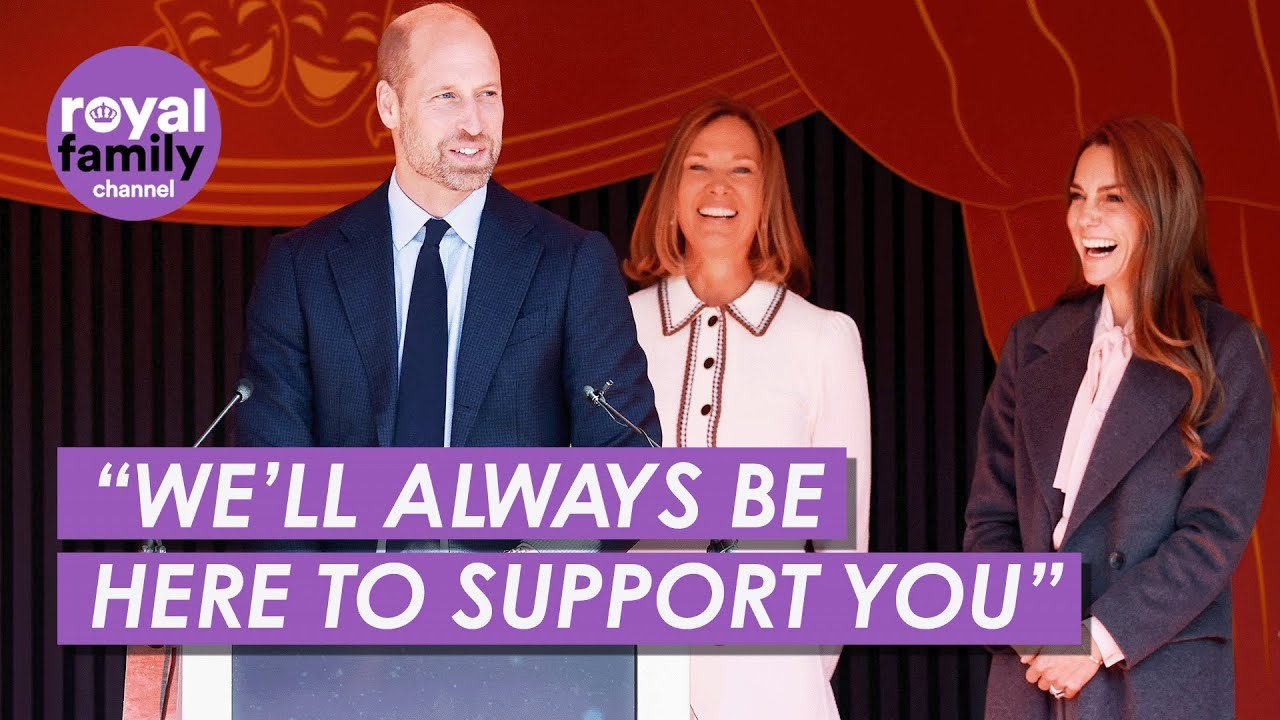
Speaking of Southport, William and Catherine recently went to Southport to visit a couple of the schools involved. As part of the visit, William gave a short speech where he said “We’ll always be here to support you.”
This made me think of a quote from one of my favourite sitcoms – Yes, Prime Minister: Sir Humphrey is discussing the issue of St George’s Island with the senior civil servant for the Foreign Office. St George’s Island is a (fictional) commonwealth country which is about to be invaded by Marxist guerrillas — supported by a (fictional) country called East Yemen. The Foreign Office policy is to do nothing about this.
Bernard: But what about the islanders?
Sir Humphrey: Bernard, you’re reacting like a politician.
Bernard: Well I’m sorry, but what are we going to do to help them?
Sir Richard: Nothing.
Bernard: But what if St George’s appeals to us?
Sir Richard: We’ll give them every support — short of help.
That final line has always stuck in my mind. “Every support, short of help” — that could sum up just about every meaningless platitude uttered by our politicians today.
If you are in a position of authority, and something terrible (yet preventable) happens to someone under your authority, then you are at fault. For example, if you are a school headmaster, and one of the pupils commits suicide because they suffered constant bullying at the school, then it is your responsibility. The bullying should have been dealt with effectively — pupils should have been punished / excluded / etc. That doesn’t mean that the headteacher is guilty of murder, but there was a clear dereliction of duty. If the headmaster was to go up to the grieving family and say “I’ll always be here to support you”, you could forgive them for telling him in no uncertain terms where to go.
In actual fact, things are worse when it comes to the government. It’s not as if terrible things are happening under our government which are unconnected with what they are doing. It’s more like the government are encouraging and even causing these terrible things to happen, e.g. more migrant crossings / mass migration, higher taxes, higher inflation, Net Zero policies and the like. People in the country are suffering more and more, not in spite of what the government are doing, but because of it.
Prince William recently had a conversation with a woman who’d lost her husband to suicide. This was to promote ‘National Suicide Prevention Day’, and how the Royal Foundation is involved in forming a National Suicide Prevention Network. William was visibly moved as Rhian spoke about her husband’s suicide and the effect it had on her and her family. Obviously suicide is one of the most tragic things that can happen.
However, there are a couple of major issues here. Firstly, and most obviously, it seems madness to be trying to prevent suicide when the government is literally trying to make it legal for people to commit suicide, not to mention the quarter of a million babies aborted in one YEAR1. It seems incongruous beyond belief to be trying to prevent suicide on the one hand, and on the other hand for the State to be allowing and enabling people to end the lives of the unborn and those who are terminally ill. You can’t say “don’t commit suicide, your life is worth living” while at the same time allowing people to kill themselves who feel that their live isn’t worth living!
Secondly, government policy has a direct impact upon mental health and suicide. I think back to a phone conversation I had with the Bishop of Colchester in around 2021. He told me he had been “involved with the covid response [in Essex] at the highest levels”. I raised the issue of people committing suicide due to the lockdown restrictions, and he said some of the most chilling words anyone has ever said to me: “they have been taken into account.” There were officials during lockdown who knew that some people would commit suicide, but their lives were considered expendable because of the supposed ‘greater good’. You can’t claim to care about suicide while doing nothing about the authorities who think human life is expendable!
Additionally, if you look at the terrible state of the world today — and let’s remind ourselves that this has not happened by accident but has been the result of deliberate policies by successive governments — I can’t see why anyone WOULDN’T want to do themselves in. Think about a young person today, who has little hope of owning their own home, little hope of building loving relationships and a family, who sees only forever wars, everything getting more expensive, a growing tax burden — what hope do they have for the future?
Speaking only for myself, the honest truth is I’ve thought more about suicide over the last few years than I did in my entire life before. Nothing before 2020 really caused me to think about wanting to leave this mortal life behind, but a lot that has happened since then has.
Note: I share this not because I want sympathy or want people to worry about me. I just want to share honestly what I think many people have experienced. Frankly, I think despair and thoughts of suicide are simply a rational response to what’s happening in the world — even if I don’t think they’re a Christian response.
It’s not enough to care about people committing suicide — you have to do something about the REASONS people commit suicide. And if people are getting depressed because of the state of the world and the state of the country, the lack of hope there is at the moment, you can’t just focus on ‘suicide prevention’ — you have to do something about the problems in the country.
Catherine was also in the news last week. She co-wrote a piece entitled The Power of Human Connection in a Distracted World. In that piece she spoke about the fundamental importance of good, healthy, loving relationships. She also spoke about how today’s world is going in the opposite direction:
But if connection is the key to human thriving, we face a concerning reality: every social trend is moving in the opposite direction. For the past 70 years, we have been investing less and less in each other. We are less likely to have dinner together as a family – something we know has an enormous impact on child development. We are less likely to have friends over. We are less likely to join clubs and community groups.
Perhaps most troubling of all, more people than ever report having no one they can confide in about what is going on in their life.
We live increasingly lonelier lives, which research shows is toxic to human health, and it’s our young people (aged 16 to 24) that report being the loneliest of all – the very generation that should be forming the relationships that will sustain them throughout life.
Once again, I think much of this is well-spoken and important. At the same time, we have to ask an uncomfortable question: why have relationships broken down to such an extent in the world today? Is it simply a natural consequence of technological development? Or is it, once again, that there are forces at work which have caused this? For example, financial pressure means that in many families, both parents have to work. Social media has been intentionally made addictive by unscrupulous companies. The state (and even the church) has refused to promote and uphold marriage. Relentless secularism and materialism has caused people to live selfish lives, thinking that the pursuit of their own material wealth is the ultimate goal. The welfare state has ended up taking people’s sense of responsibility to care for one another. Consumer culture and pornography have made us see the opposite sex as only being their to fulfil our own desires.
Please don’t take this as a personal attack on William & Catherine. I get the impression that they are well-meaning. I think they do care, to a point (despite William’s affiliation with the WEF and climate change agenda, and Catherine’s embrace of paganism!). This is why I’ve spoken about them several times, because they stand out as being different from most of our political leaders. Plus, I can only begin to understand how much pressure there must be for them not to speak out about ‘difficult’ issues, to be ‘interfering in politics’.
At the same time — love compels us. As the apostle John said, which I quoted at the start, “let us not love with words or speech but with actions and in truth”. Love means nothing if it is merely verbal. Love must lead to action, and it requires truth. If we want the best for people, we must DO what is best for them, not simply mouth empty platitudes. Obviously most of us are not in a position to do anything about the problems with the government or the elites, but the obligation to love with actions and in truth applies to us all.
If we really love others, then we can’t simply rely on cliches or ‘what everybody else does’. We need to think about what’s actually best for them — to listen to them, to care for them, and to act accordingly. It’s not enough simply to talk about suicide prevention without also thinking about why people might be considering suicide at the moment and doing something about it. Similarly, it’s not enough simply to highlight the fact that we are living in a distracted world without exploring the many reasons that the world is like this.
Above all, from a Christian perspective, loving people must mean desiring them to be saved. That’s not something which is in opposition to caring for their practical needs, but complementary to it. To truly love people means to love them as whole people — body and soul. We love people by providing bread for their physical needs, but — more than that — leading them to Jesus Christ, the true bread of life (John 6:35).
And this is the challenge for all of us: are we willing not simply to mouth nice-sounding words, to empathise with people, but at the end of the day do nothing to really help them? Or do we want to see things in our world change for the better, and are we committed to doing what we can to make that happen? Are we committed to loving God and loving our neighbour?
I believe that it is only through love that we will see the world changing, and that love from God in the power of the Holy Spirit. That love will look different depending on our situation — if we are in a position of authority, we have been given it in order to love. If we are not in a position of authority, we are still called to love those whom God sends our way. In the words of that hymn, “Father I place into your hands”:
Father, I want to be with you
And do the things You do.
Father, I want to speak the words
That you are speaking too.
Father, I want to love the ones
That you will draw to you,
For I know that I am one with you.
- According to the most recent figures available, 2022. Something like one third of all pregnancies now end in an abortion. ↩︎
Leave a Reply